
Embark on a journey into the world of Top Performing Mutual Funds, where we explore the key factors that contribute to their success and how they can benefit investors.
Discover the nuances of evaluating mutual fund performance and the impact of market conditions on their success.
Introduction to Mutual Funds
Mutual funds are investment vehicles that pool money from multiple investors to invest in a diversified portfolio of securities such as stocks, bonds, or other assets. These funds are managed by professional fund managers who make investment decisions on behalf of the investors.
Investing in mutual funds offers several benefits, including diversification, professional management, liquidity, and convenience. By pooling resources with other investors, individuals can access a diversified portfolio that may not have been possible on their own. Professional fund managers conduct research and analysis to make informed investment decisions, potentially leading to better returns. Mutual funds also provide liquidity, allowing investors to buy or sell their shares on any business day at the fund’s net asset value (NAV).
Types of Mutual Funds
There are different types of mutual funds available to investors based on their investment objectives and risk tolerance:
- Equity Funds: These funds primarily invest in stocks or equities, offering the potential for high returns but also higher risk due to market volatility.
- Debt Funds: Debt funds invest in fixed-income securities such as bonds and treasury bills, providing regular income and lower risk compared to equity funds.
- Hybrid Funds: Also known as balanced funds, these invest in a mix of equities and debt instruments to provide a balance between growth and income.
Top Performing Mutual Funds
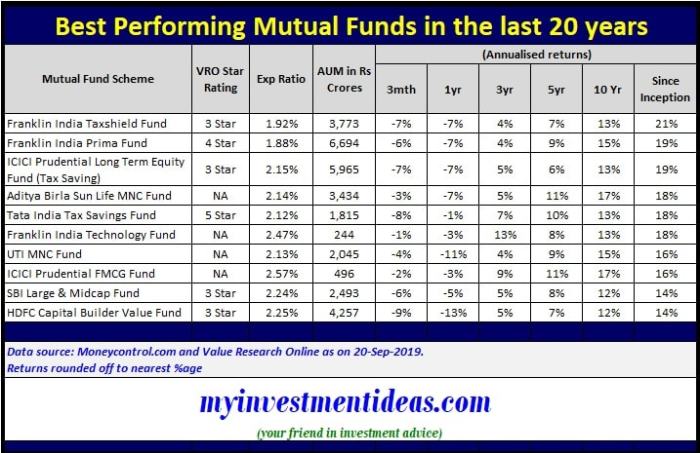
When it comes to mutual funds, investors are always on the lookout for the top performers. These funds have shown consistent growth and strong returns, making them attractive options for those looking to grow their investments.
Criteria for Evaluating Performance
To determine the top performing mutual funds, several key criteria are typically used. These include:
- Historical Returns: Looking at the fund’s past performance over different time periods to assess its track record.
- Risk-adjusted Returns: Considering the fund’s returns in relation to the level of risk taken on by the fund manager.
- Expense Ratio: Evaluating the fees charged by the fund and how they impact overall returns.
- Asset Under Management (AUM): Examining the size of the fund and its ability to manage investments effectively.
Importance of Past Performance vs. Future Potential
While past performance is a crucial factor in evaluating mutual funds, it is essential to also consider the fund’s future potential. Here’s why:
- Historical Performance: Past performance can provide insight into how the fund has weathered different market conditions and its ability to deliver returns consistently.
- Future Potential: Assessing the fund’s investment strategy, management team, and market outlook can help investors gauge its potential for future growth.
- Risk Management: Understanding how the fund manages risks and adapts to changing market conditions is vital for predicting its future performance.
Strategies of Top Performing Mutual Funds
Mutual funds employ various strategies to achieve their investment objectives and deliver strong performance to investors. The strategies can vary widely depending on the fund manager’s approach and the market conditions.
Active vs. Passive Management Styles
Active management involves a hands-on approach where fund managers actively buy and sell securities in an attempt to outperform the market. They rely on research, analysis, and market timing to make investment decisions. On the other hand, passive management, commonly associated with index funds, aims to replicate the performance of a specific market index. Passive funds typically have lower fees compared to actively managed funds.
Impact of Market Conditions
Market conditions play a crucial role in determining the performance of mutual funds. During bull markets, when stock prices are rising, actively managed funds may outperform passive funds due to their ability to capitalize on opportunities. However, during bear markets, when stock prices are falling, passive funds may fare better as they provide broad market exposure and lower costs. It is essential for investors to consider the prevailing market conditions when choosing mutual funds for their investment portfolios.
Risks Associated with Mutual Funds
Investing in mutual funds comes with certain risks that investors need to be aware of. These risks can impact the performance and returns of the investment. One of the key risks associated with mutual funds is market risk, where the value of the fund can fluctuate based on the overall performance of the financial markets. Another risk is liquidity risk, where investors may face challenges in selling their shares if the fund has limited liquidity.
Additionally, credit risk is a concern, especially for funds investing in bonds or other debt securities, as the issuer may default on payments.
Diversification to Mitigate Risks
Diversification is a strategy used by mutual funds to mitigate risks. By spreading investments across different asset classes, sectors, and regions, mutual funds reduce the impact of any one investment underperforming. This helps in balancing the overall risk exposure of the fund and potentially reducing losses during market downturns. Diversification is a key principle in risk management for mutual fund investments.
External Factors Affecting Mutual Fund Performance
External factors can also influence the performance of mutual funds. Economic conditions, such as inflation rates, interest rates, and overall market sentiment, can impact the value of the fund holdings. Geopolitical events, regulatory changes, and natural disasters are other external factors that can affect mutual fund performance. It is essential for investors to consider these external factors when making investment decisions in mutual funds.
In conclusion, Top Performing Mutual Funds offer a promising avenue for investors seeking growth and stability in their portfolios. By understanding the strategies behind their success and navigating potential risks, investors can make informed decisions to achieve their financial goals.
Essential Questionnaire
What criteria determine the performance of mutual funds?
The performance of mutual funds is typically assessed based on factors such as returns, risk-adjusted returns, expense ratios, and consistency of performance over time.
How do market conditions influence the performance of mutual funds?
Market conditions such as economic trends, interest rates, and geopolitical events can significantly impact the performance of mutual funds, affecting both short-term and long-term returns.
What are the risks associated with investing in mutual funds?
Common risks include market risk, interest rate risk, credit risk, and liquidity risk, which can affect the value of investments in mutual funds.


