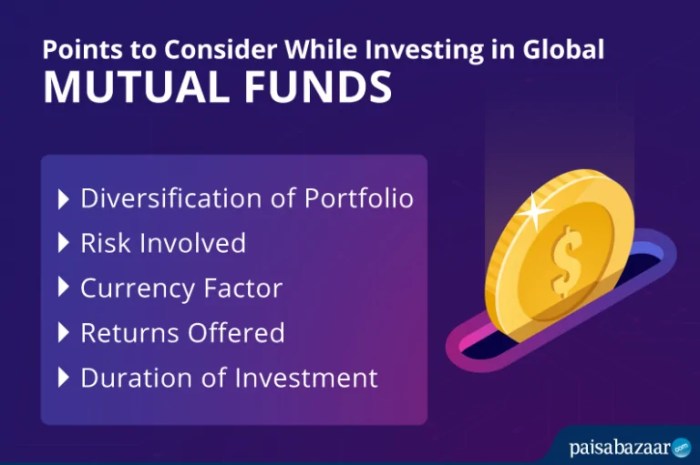
As Global Mutual Funds take the spotlight, this introduction invites readers into a realm of financial possibilities, offering a detailed yet engaging exploration of the subject matter.
Delve into the nuances of different types, performance metrics, and investment strategies surrounding global mutual funds.
Global Mutual Funds Overview
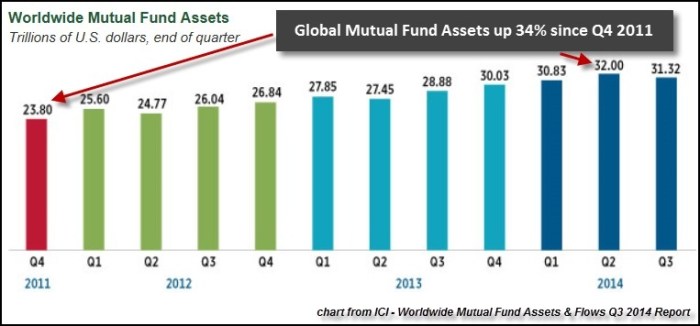
Global mutual funds are investment funds that pool money from multiple investors to invest in a diversified portfolio of securities from around the world. These funds are managed by professional fund managers who make decisions on behalf of the investors to achieve the fund’s investment objectives.Global mutual funds differ from domestic mutual funds in that they invest in a mix of securities from different countries and regions, providing investors with exposure to international markets and opportunities.
This diversification helps reduce risk by spreading investments across various economies and industries.
Popular Global Mutual Fund Companies
- Vanguard Total World Stock Index Fund
- Fidelity International Growth Fund
- T. Rowe Price Global Equity Fund
Benefits of Investing in Global Mutual Funds
- Diversification: Global mutual funds offer exposure to a wide range of markets and industries, reducing risk through diversification.
- Access to International Markets: Investors can benefit from growth opportunities in different countries and regions that may not be available in domestic markets.
- Professional Management: Fund managers with expertise in global markets make investment decisions on behalf of investors, leveraging their knowledge and experience.
Types of Global Mutual Funds
Global mutual funds come in various types, each with its own investment strategy and level of risk. Let’s explore the different types available and how they operate.
Actively Managed vs. Passively Managed Global Mutual Funds
Actively managed global mutual funds are overseen by fund managers who actively buy and sell securities in an attempt to outperform the market. They involve higher fees due to the research and management involved. On the other hand, passively managed global mutual funds aim to replicate the performance of a specific index, such as the S&P 500, with lower fees as they require minimal management.
Risk Factors Associated with Investing in Global Mutual Funds
Investing in global mutual funds comes with risks, including market risk, currency risk, geopolitical risk, and liquidity risk. Market risk refers to the possibility of losing money due to market fluctuations, while currency risk arises from changes in exchange rates. Geopolitical risk involves political instability in various countries, and liquidity risk pertains to the ease of buying or selling assets in the market.
Sector-Specific Global Mutual Funds
Sector-specific global mutual funds focus on investing in a particular sector of the economy, such as technology, healthcare, or energy. These funds allow investors to target their investments in industries they believe will outperform the broader market. Sector-specific global mutual funds can provide diversification within a specific industry while still offering exposure to global markets.
Global Mutual Funds Performance
When evaluating the performance of global mutual funds, several key metrics are used to gauge how well the fund has performed over a specific period. These metrics provide valuable insights into the fund’s historical performance and help investors make informed decisions.
Performance Metrics for Global Mutual Funds
- Annualized Returns: This metric calculates the average annual return of the fund over a specific period, providing a clear picture of the fund’s performance.
- Sharpe Ratio: The Sharpe ratio measures the risk-adjusted return of the fund, taking into account the level of risk taken to achieve the returns.
- Standard Deviation: This metric assesses the volatility of the fund’s returns, helping investors understand the level of risk associated with the fund.
Interpreting Historical Performance Data
- Comparing to Benchmarks: Investors should compare the fund’s performance to relevant benchmark indices to understand how well the fund has performed relative to the market.
- Trend Analysis: Analyzing the fund’s performance trends over different time periods can provide insights into its consistency and potential future performance.
- Risk-Return Tradeoff: Understanding the balance between risk and return is crucial in interpreting historical performance data, as higher returns often come with increased risk.
Factors Impacting Performance
- Market Conditions: Global economic conditions, geopolitical events, and market trends can significantly impact the performance of global mutual funds.
- Management Decisions: The fund manager’s investment choices, strategies, and overall management style can influence the fund’s performance.
- Fees and Expenses: High fees and expenses can eat into the fund’s returns, affecting its overall performance over time.
Role of Benchmark Indices
Benchmark indices play a crucial role in measuring the performance of global mutual funds by providing a standard for comparison. Investors can assess how well the fund has performed relative to a specific benchmark, helping them evaluate the fund’s performance in the context of the market.
Investing in Global Mutual Funds
Investing in global mutual funds can be a great way to diversify your portfolio and take advantage of international markets. Here are some tips and information to consider when investing in global mutual funds:
Selecting the Right Global Mutual Fund
- Consider your investment goals and risk tolerance before choosing a global mutual fund.
- Research the fund’s performance history, management team, fees, and investment strategy.
- Diversify your portfolio by selecting funds that invest in different regions and sectors.
- Check the fund’s minimum investment requirements to ensure they align with your budget.
Buying and Selling Shares
- To buy shares of a global mutual fund, you can do so through a brokerage account or directly through the fund company.
- When selling shares, consider any potential fees or taxes that may apply, depending on how long you’ve held the shares.
- Monitor the fund’s performance regularly and consider selling if it no longer aligns with your investment goals.
Tax Implications
- Investing in global mutual funds may have tax implications, such as foreign tax credits, capital gains taxes, and withholding taxes on dividends.
- Consult with a tax professional to understand how investing in global mutual funds may impact your tax situation.
Diversifying Your Portfolio
- Use global mutual funds to diversify your portfolio across different countries, currencies, and industries.
- Consider including both developed and emerging market funds to spread risk and capture growth opportunities.
- Regularly review and rebalance your portfolio to ensure it remains aligned with your long-term financial goals.
Benefits of Mutual Funds
Investing in mutual funds can offer several benefits to investors. Let’s explore some of the key advantages that mutual funds provide.
Diversification in Mutual Funds
Diversification is a fundamental concept in investing, and mutual funds excel in providing investors with a diversified portfolio. By pooling money from multiple investors, mutual funds can invest in a wide range of securities such as stocks, bonds, and other assets. This helps spread out the risk and reduces the impact of volatility in any single investment.
Professional Fund Management
One of the significant benefits of mutual funds is the access to professional fund managers who make investment decisions on behalf of investors. These experienced professionals conduct research, analyze market trends, and manage the portfolio to achieve optimal returns. Investors can benefit from the expertise and knowledge of these professionals without having to actively manage their investments.
Liquidity in Mutual Funds
Mutual funds offer liquidity to investors, giving them the flexibility to buy or sell their shares at any time. Unlike individual stocks or bonds, which can be illiquid and difficult to sell, mutual funds are traded on exchanges and can be easily bought or sold based on the current market price. This liquidity feature provides investors with easy access to their funds when needed.
In conclusion, navigating the world of Global Mutual Funds opens up a myriad of investment avenues, beckoning both seasoned investors and newcomers to explore the diverse opportunities this financial landscape has to offer.
General Inquiries
What are the key differences between global mutual funds and domestic mutual funds?
Global mutual funds invest in a variety of markets worldwide, while domestic mutual funds focus solely on the investor’s home country.
How can investors interpret historical performance data of global mutual funds?
Investors can analyze historical performance data by comparing returns over different time periods and benchmarking against relevant indices.
What are some tips for selecting the right global mutual fund for an investment portfolio?
Investors should consider factors like fund objectives, management style, fees, and historical performance when choosing a global mutual fund.


