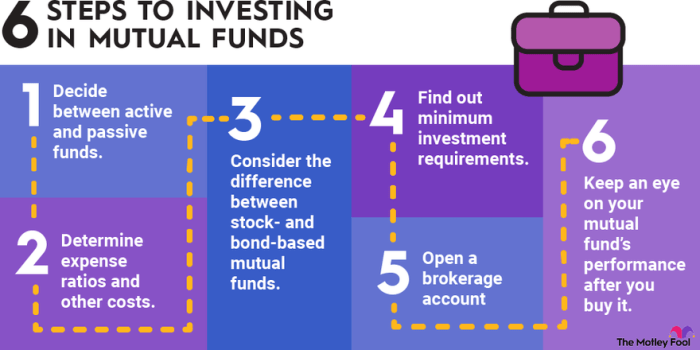
Embark on the journey of investing in mutual funds with this detailed guide, covering everything you need to know from start to finish.
Learn about the benefits, types, and steps involved in making wise investment decisions.
Introduction to Mutual Funds
Mutual funds are investment vehicles that pool money from multiple investors to invest in a diversified portfolio of stocks, bonds, or other securities. They are managed by professional fund managers who make investment decisions on behalf of the investors.
Investing in mutual funds offers several benefits, such as diversification, professional management, liquidity, and convenience. By investing in a mutual fund, investors can access a diversified portfolio without the need to purchase individual securities.
Types of Mutual Funds
- Equity Funds: These funds invest primarily in stocks, offering the potential for high returns but also higher risk.
- Bond Funds: These funds invest in fixed-income securities like government or corporate bonds, providing a steady income stream.
- Money Market Funds: These funds invest in short-term, low-risk securities, making them a suitable option for investors seeking stability and liquidity.
- Index Funds: These funds aim to replicate the performance of a specific market index, offering low costs and broad market exposure.
- Asset Allocation Funds: These funds invest in a mix of asset classes, adjusting the allocation based on market conditions and investment goals.
Why Invest in Mutual Funds

Investing in mutual funds offers several advantages over individual stock picking. One of the key benefits is diversification, which helps spread risk across a wide range of investments. This can help reduce the impact of volatility and market fluctuations on your overall portfolio.
Diversification in Mutual Funds
Mutual funds pool money from multiple investors to invest in a diversified portfolio of stocks, bonds, or other securities. By holding a variety of assets, mutual funds help reduce the risk associated with investing in a single stock. For example, if one company in the fund underperforms, the impact on your overall investment is minimized due to the presence of other holdings.
Risk Reduction in Investment Portfolios
Mutual funds help reduce risk in investment portfolios through diversification. For instance, a mutual fund investing in different sectors or regions can mitigate the risk of sector-specific or geographical market downturns. Additionally, mutual funds offer professional management and research, which can help in making informed investment decisions and potentially outperforming the market.
Types of Mutual Funds
When it comes to mutual funds, there are several types that investors can choose from based on their investment goals and risk tolerance. These types can be broadly categorized into equity funds, debt funds, and hybrid funds.
Equity Funds
Equity funds primarily invest in stocks of companies, offering potential for high returns but also higher risk. These funds are suitable for investors with a higher risk appetite and a long-term investment horizon.
Debt Funds
Debt funds invest in fixed-income securities such as government bonds, corporate bonds, and other debt instruments. These funds are considered less risky compared to equity funds and are suitable for conservative investors looking for stable returns.
Hybrid Funds
Hybrid funds, also known as balanced funds, invest in a mix of equities and debt instruments. These funds aim to provide a balance between growth and stability, making them suitable for investors seeking a moderate level of risk with the potential for growth.
Actively Managed vs. Passively Managed Funds
Actively managed mutual funds are overseen by fund managers who make decisions on buying and selling securities in an attempt to outperform the market. On the other hand, passively managed index funds aim to replicate the performance of a specific market index without actively selecting securities.
Suitability of Each Type of Mutual Fund
- Equity funds are suitable for investors seeking high growth potential over the long term.
- Debt funds are ideal for conservative investors looking for stable returns and capital preservation.
- Hybrid funds are suitable for investors looking for a balanced approach to growth and stability in their investment portfolio.
How to Invest in Mutual Funds
Investing in mutual funds can be a great way to grow your wealth over time. Here are the steps involved in opening a mutual fund account and tips on choosing the right fund for you.
Opening a Mutual Fund Account
Before investing in mutual funds, you need to open a mutual fund account. Here are the steps involved:
- Research and choose a reputable fund company or financial institution.
- Fill out the necessary paperwork to open an account.
- Decide on the type of account – individual, joint, or retirement account.
- Choose the mutual fund(s) you want to invest in.
- Submit your initial investment amount.
Factors to Consider When Choosing a Mutual Fund
When selecting a mutual fund to invest in, consider the following factors:
- Investment goals and risk tolerance.
- Expense ratios and fees associated with the fund.
- Performance history and track record of the fund.
- Investment strategy and portfolio holdings.
- Diversification and asset allocation.
Monitoring and Managing Your Investment
Once you have invested in mutual funds, it’s important to monitor and manage your investment over time. Here are some tips:
- Regularly review your investment performance and adjust your portfolio if needed.
- Stay informed about market trends and economic factors that may impact your investments.
- Rebalance your portfolio periodically to maintain your desired asset allocation.
- Consider consulting with a financial advisor for expert guidance on managing your investments.
In conclusion, mastering the art of investing in mutual funds can pave the way for a secure financial future. Start your investment journey today!
General Inquiries
How much do I need to start investing in mutual funds?
To begin investing in mutual funds, you can typically start with as little as $500 or even less, depending on the fund.
Are mutual funds a safe investment option?
Mutual funds can offer a diversified investment portfolio, reducing risk compared to individual stock picking, making them a relatively safer option.
Can I lose money investing in mutual funds?
As with any investment, there is a potential to lose money in mutual funds, especially if the market experiences a downturn. However, diversification can help mitigate losses.


